
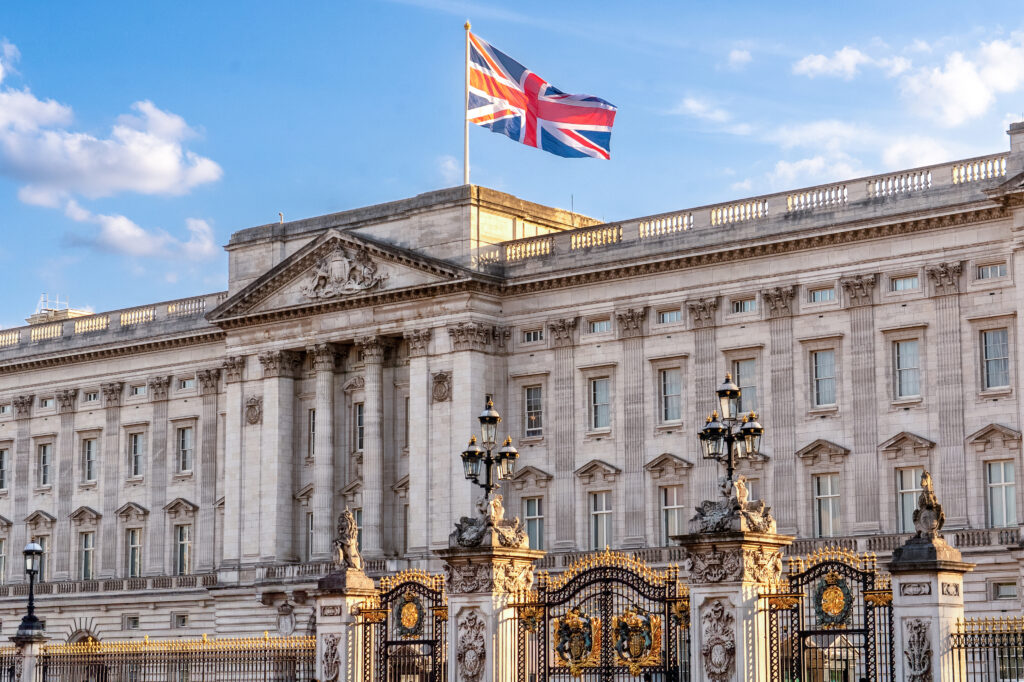
It is our great pleasure to welcome you to London, a city whose relationship with knowledge, learning, and the written word spans more than a thousand years. Few places on earth bring together such a dense and living concentration of libraries, universities, archives, and museums, and few cities could offer a more fitting backdrop for an international gathering devoted to the future of libraries.
London is, in many respects, a city built on collections. At its heart stands the British Library, one of the largest libraries in the world and the custodian of the UK’s national published archive, holding everything from the Magna Carta and the Gutenberg Bible to Beatles lyrics scrawled on the back of an envelope. Nearby, the Library of the London School of Economics, Senate House Library at the University of London, and the historic London Library in St James’s Square each tell a different chapter of the same story: that this city has, for centuries, treated the preservation and sharing of knowledge as a public good worth protecting.
That same spirit runs through London’s universities and learning institutes. UCL, King’s College London, Imperial College, and the London School of Economics sit alongside specialist bodies such as the Royal Society and the Wellcome Collection, whose galleries and library explore the connections between medicine, life, and art. Together they make London one of the most internationally connected centres of research and higher education anywhere in the world, drawing students, scholars, and practitioners from every continent.
And then there are the museums, many of them free to enter and open to all, in keeping with a very London belief that great collections belong to everyone. The British Museum holds human history across two million years of objects; the Victoria and Albert Museum celebrates art and design in all its forms; the Natural History Museum and the Science Museum, standing almost side by side in South Kensington, bring the wonder of the natural world and scientific discovery to millions of visitors each year. Smaller, equally cherished institutions, from the Foundling Museum to Sir John Soane’s Museum, reward those who look beyond the obvious landmarks.
London is easily reached from abroad by air, rail, or sea. By air, five airports (Heathrow, Gatwick, Stansted, Luton, City) offer flights worldwide. By rail, Eurostar high-speed trains connect St Pancras directly with Paris, Brussels, and Amsterdam. By sea, ferries from France, Belgium, and the Netherlands dock at Dover or Harwich, with onward rail links into central London.
The most convenient route is a direct flight to London Heathrow, served nonstop from major hubs including Lagos, Cairo, Nairobi, Johannesburg, Accra, and Casablanca on carriers such as British Airways, Virgin Atlantic, Kenya Airways, and EgyptAir. Travellers from smaller cities typically connect through one of these hubs, or via Dubai or a European gateway such as Paris or Amsterdam, before continuing to London by air or, from Continental Europe, by Eurostar train.
Direct long-haul flights are the fastest option, with nonstop services to London Heathrow from Tokyo, Singapore, Hong Kong, Delhi, Mumbai, Bangkok, and Seoul on airlines including British Airways, Japan Airlines, Singapore Airlines, and Cathay Pacific. Travellers from smaller Asian cities usually connect via one of these hubs or through Dubai, Doha, or Istanbul, which also offer frequent onward connections to London.
London is easiest to reach overland: Eurostar high-speed trains run directly into St Pancras from Paris, Brussels, Amsterdam, and Rotterdam in as little as two hours. Ferries also cross from France, Belgium, and the Netherlands to Dover or Harwich for those travelling by car or coach. For destinations further afield, short direct flights connect virtually every major European city to London’s five airports.
London is one of the most connected cities in the world for North American travellers, with direct flights to Heathrow, Gatwick, and other London airports from dozens of cities including New York, Toronto, Los Angeles, Chicago, and Miami, operated by British Airways, Virgin Atlantic, American, United, Delta, and Air Canada. Flight times average six to nine hours, making a direct nonstop flight the clear best option.
As the most distant region from the UK, travel from Australia and New Zealand is best done via a one-stop flight, typically connecting through Singapore, Dubai, Doha, or Hong Kong on Qantas, Singapore Airlines, Emirates, or Qatar Airways. Total journey time is usually 22 to 24 hours including the stopover, making it worth choosing an itinerary with a comfortable connection or a short stopover break.
Direct flights to London Heathrow are available from Buenos Aires, São Paulo, and Bogotá on British Airways and LATAM, taking roughly 13 to 14 hours. Travellers from other South American cities generally connect through one of these gateways, or via Madrid, Lisbon, or a North American hub such as Miami, before continuing on to London.
© visitlondon.com/Antoine Buchet
Sie sehen gerade einen Platzhalterinhalt von Vimeo. Um auf den eigentlichen Inhalt zuzugreifen, klicken Sie auf die Schaltfläche unten. Bitte beachten Sie, dass dabei Daten an Drittanbieter weitergegeben werden.
Mehr InformationenSie sehen gerade einen Platzhalterinhalt von YouTube. Um auf den eigentlichen Inhalt zuzugreifen, klicken Sie auf die Schaltfläche unten. Bitte beachten Sie, dass dabei Daten an Drittanbieter weitergegeben werden.
Mehr InformationenSie müssen den Inhalt von reCAPTCHA laden, um das Formular abzuschicken. Bitte beachten Sie, dass dabei Daten mit Drittanbietern ausgetauscht werden.
Mehr Informationen